Sources: Indian food-processing and culinary literature on aam papad as traditional dried mango fruit leather; Indian food-history literature on regional mango preservation traditions.
https://nchm.gov.in/sites/default/files/2025-01/Indian_Food_Heritage.pdf
Place
The hero ingredient is mango, a fruit inseparable from the culinary landscape of India. Aam Papad itself travels under many regional names—including amsotto, amawat, amba vadi and mamidi tandra—showing how widely the idea of preserving mango pulp has travelled across the country.
Season
Its story begins in the Indian summer, the great mango season. Aam Papad is, in essence, a clever answer to seasonality: ripe mango is transformed into a dried fruit preparation that can be enjoyed long after fresh mangoes disappear from the market.
Make
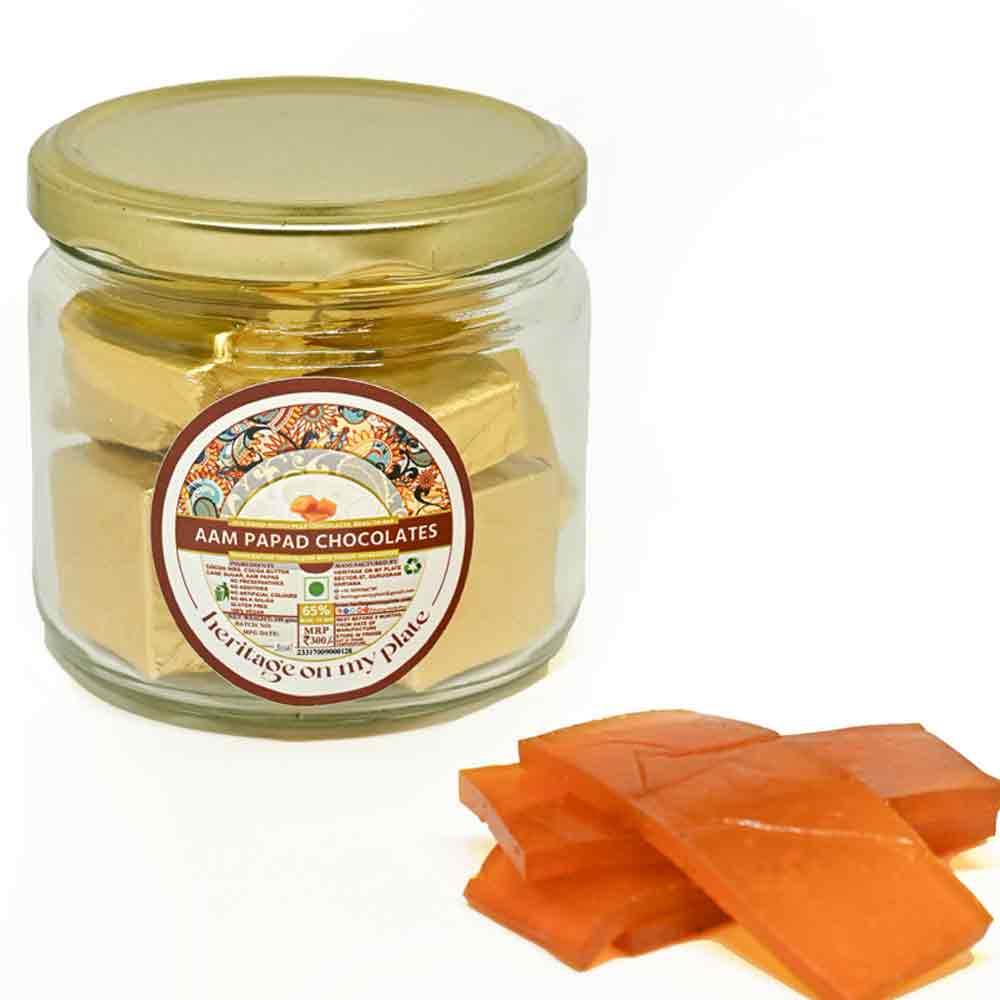
Traditionally, ripe mango pulp is sweetened, spread into thin layers and dried until it becomes a dense, chewy fruit leather. We pair that concentrated mango character with chocolate, bringing together fruitiness, gentle tartness and cacao.
Tradition
Drying mango pulp is an established Indian preservation tradition. Its many regional names and forms reveal how deeply the preparation entered domestic food culture across different parts of India, turning the abundance of mango season into something that could be stored and enjoyed later.
Modern Use
Aam Papad Chocolate turns a much-loved Indian snack into a contemporary chocolate bite—sweet, tart, fruity and rich at once. Enjoy it as an afternoon treat, an after-meal chocolate, or simply as a new way to rediscover the taste of Indian summer.

Reviews
There are no reviews yet.