Sources: National Council for Hotel Management & Catering Technology, Indian Food Heritage; historical culinary references including the Nimatnama-i-Nasiruddin-Shahi on betel and paan preparations.
https://nchm.gov.in/sites/default/files/2025-01/Indian_Food_Heritage.pdf
Place
Paan belongs not to one state but to a vast Indian and South Asian cultural geography, with distinctive traditions from Banaras and Magadh to Bengal, Assam and southern India. At its centre is the fragrant betel leaf, around which generations have built their own combinations of fennel, cardamom, rose, coconut and other aromatics.
Season
Paan is genuinely a flavour for all seasons. Traditionally offered after meals and during celebrations, weddings and gatherings, it is tied more closely to occasion and hospitality than to any particular harvest season.
Make
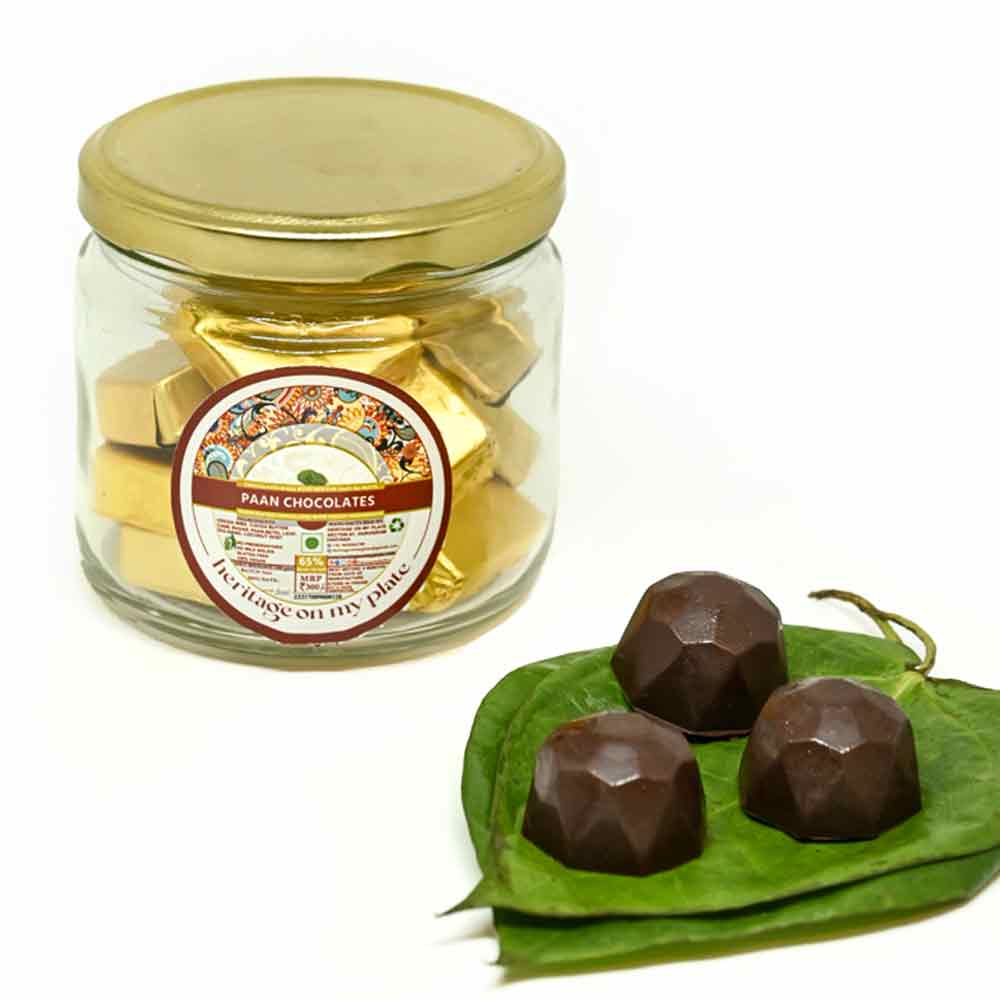
Our chocolate interprets the aromatic world of meetha paan through cacao, bringing together familiar paan notes with the richness of chocolate. The objective is to capture the fragrance and post-meal pleasure of paan rather than merely reproduce its sweetness.
Tradition
Paan has appeared in Indian cultural and culinary records for centuries. Medieval sources—including the Nimatnama—describe elaborate betel preparations with fragrant ingredients, while paan subsequently became embedded in courtly etiquette, household hospitality, weddings and the everyday ritual of ending a meal.
Modern Use
Think of Paan Chocolate as a contemporary after-meal mukhwas: a small chocolate carrying the aromatic memory of an Indian dining ritual. Enjoy it after dinner or serve it as an unexpected petit four when entertaining.


Reviews
There are no reviews yet.